
If your keyboard is suddenly typing the wrong characters, certain keys aren’t responding, or strange symbols keep appearing, you’re not alone. Hundreds of users experience keyboard problems daily—most of which can be fixed in just a few clicks or simple steps. On this page, you’ll discover the fastest solutions to get your keyboard back to normal, plus expert troubleshooting guides for deeper fixes.
To return your keyboard keys back to normal, try these quick steps: Toggle the NumLock key, cycle through your keyboard language with Win+Spacebar, turn off Sticky Keys by pressing Shift five times, and restart your computer. If the issue persists, check your system settings for layout or accessibility changes or clean your keyboard physically to fix stuck keys.
Common scenarios you’ll solve with this guide:
-
Letters typing as numbers or symbols
-
Unexpected foreign characters
-
Sticky or unresponsive keys
-
Complete keyboard chaos after a Windows or macOS update
Let’s bring your keyboard back to life—quickly and painlessly!
Quick Keyboard Fixes You Should Try First
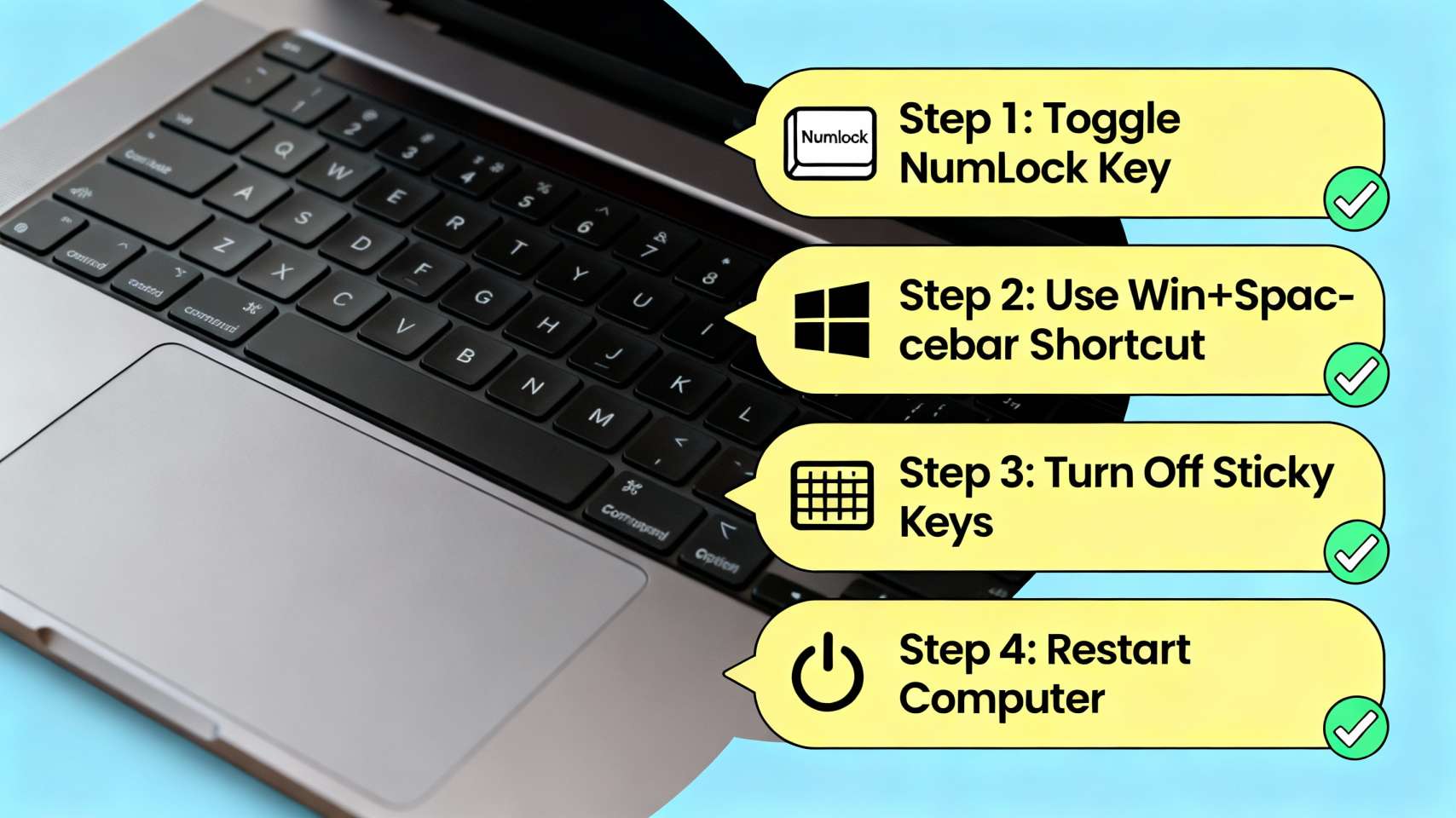
If your keyboard is acting up, it’s smart to rule out the fastest, most common solutions before diving deeper. These quick steps address 80% of issues users experience with trick keys or wrong character output.
-
Toggle NumLock or Fn+NumLock
-
When your letters turn into numbers or the numpad behaves oddly:
-
Find the NumLock key and press it once.
-
On many laptops, press Fn + NumLock together.
-
Look for a small indicator light to confirm NumLock is toggled.
-
-
-
Change Keyboard Language/Layout Instantly
-
Random symbols or wrong letters often mean you accidentally switched layouts:
-
On Windows: Press Windows Key + Spacebar. You’ll see the layout switch in the corner of your screen.
-
On Mac: Press Control + Spacebar to return to your default input source.
-
Confirm the right language (e.g., “ENG US”) is selected.
-
-
-
Turn Off Sticky Keys or Other Accessibility Features
-
If pressing one key gives strange results or two keys seem “linked”:
-
For Windows: Rapidly tap the Shift key 5 times. If prompted about Sticky Keys, choose “Turn off.”
-
In Settings, also check “Ease of Access > Keyboard.”
-
For Mac: Go to System Settings > Accessibility > Keyboard, and ensure “Sticky Keys” and “Slow Keys” are off.
-
-
-
Restart Your Computer
-
Sometimes, a simple reboot undoes temporary OS glitches causing keyboard errors:
-
Save your work, restart, and re-test your keyboard as soon as you log in again.
-
-
Pro Tip: After each quick fix, test your keyboard in a text editor (like Notepad or TextEdit) to see if it’s working normally.
Diagnose Keyboard Problems Quickly: Common Issues & Fix Solutions
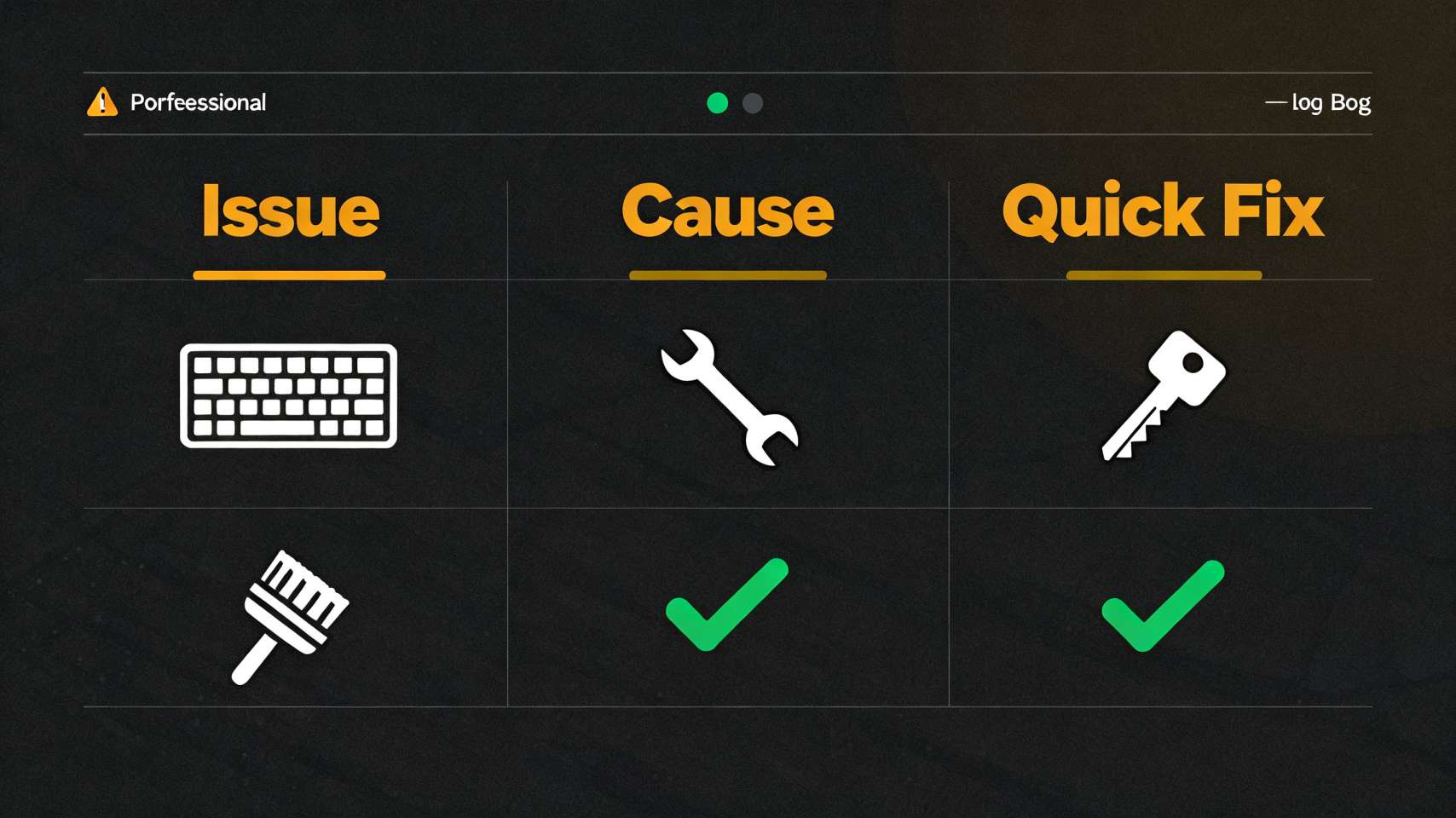
Before diving into lengthy troubleshooting, use this handy table to pinpoint your keyboard’s problem and jump straight to the most effective fix.
| Keyboard Issue | Likely Cause | Quick Fix Steps | Guide Section |
|---|---|---|---|
| Keys type wrong characters or symbols | Wrong keyboard layout | Win+Spacebar (cycle layouts) | Troubleshooting Layout Issues |
| Certain keys don’t respond | Sticky/Filter Keys, dust | Shift x5, clean keyboard | Accessibility & Cleaning Section |
| Numbers instead of letters (laptops) | NumLock or layout swap | Toggle NumLock or Fn+NumLock | Laptop-Specific Fixes |
| Keys physically stuck or repeat uncontrollably | Debris, spill, membrane jam | Clean/remove keycap, dry keyboard | Cleaning Guide: Step by Step |
| All keys act wrong after update | OS/settings changed | Layout reset, driver update | Windows/Mac Troubleshooting |
| Wireless/Bluetooth keyboard not working | Battery or connection lost | Replace battery, re-pair | Wireless Keyboard Fixes |
| Works in BIOS but not in Windows | Driver issue/OS bug | Update/reinstall drivers | Advanced Tech Support |
Troubleshooting Keyboard Layout & Language Issues (Step-by-Step Visual Guide)
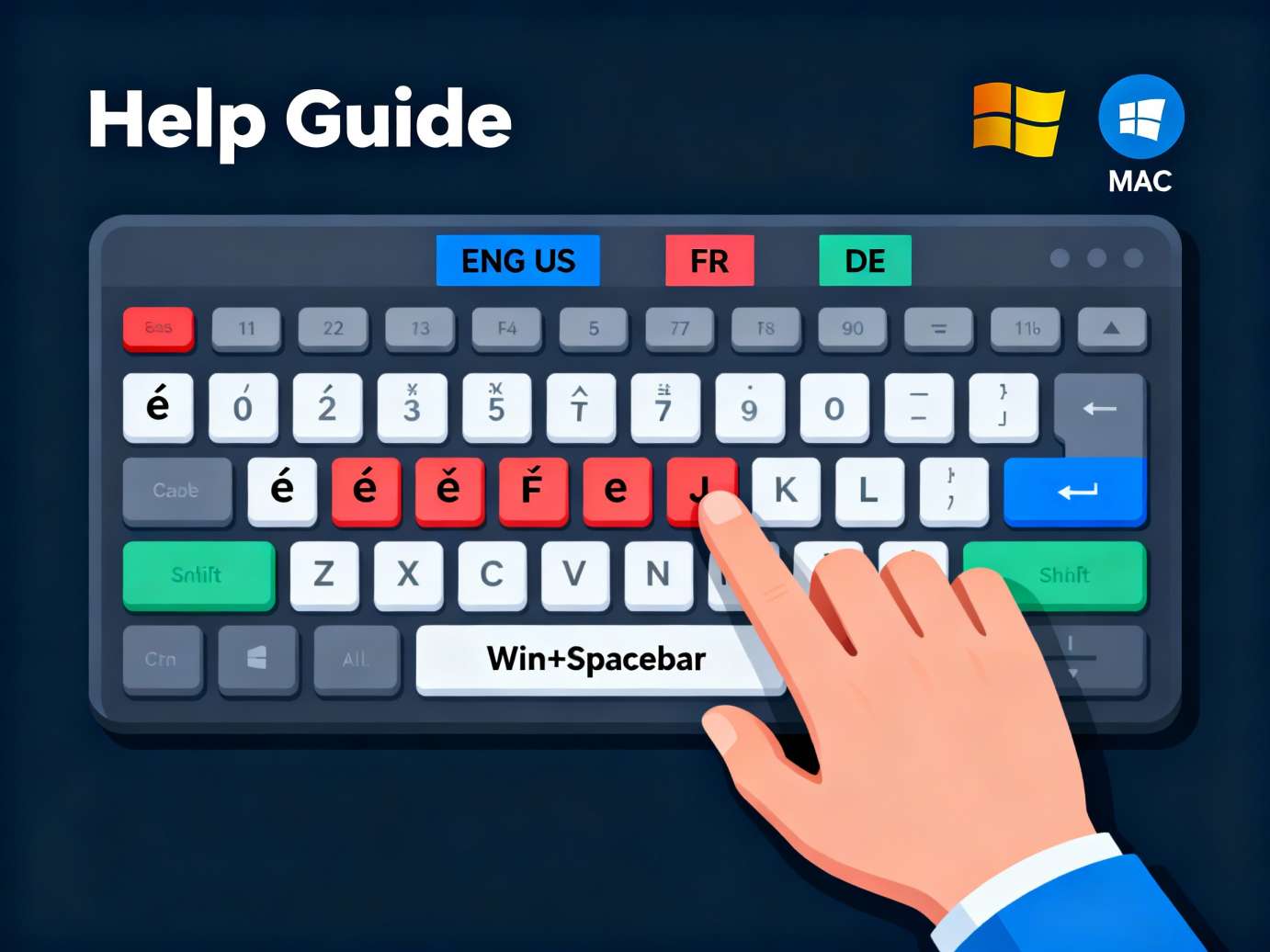
If your keyboard suddenly starts typing unexpected symbols, foreign characters, or your keys seem completely remapped, the cause is often a software setting—such as a changed input language or keyboard layout. Follow this step-by-step guide to diagnose and fix layout-related problems on Windows and Mac.
Step 1: Check Your Displayed Input Language
-
Look at the bottom-right (Windows) or top-right (Mac) of your screen for a language code (e.g., ENG US, ENG UK, FR, DE).
-
If it doesn’t match your usual typing language, you’re likely in the wrong layout.
Step 2: Instantly Switch Back
-
Windows: Press Win + Spacebar until you see your intended language/input appear.
-
Mac: Press Control + Spacebar to jump between your enabled input sources.
Step 3: Set Your Default Layout (Windows)
-
Go to Settings > Time & Language > Language & Region
-
Under “Preferred languages,” click your language, then “Options.”
-
Check that your preferred keyboard layout is first in the list.
Step 4: Remove Extra Layouts (Windows)
-
In the same options screen, remove layouts you don’t use to prevent accidental switches.
Step 5: Mac Keyboard Settings
-
Open System Settings > Keyboard > Input Sources
-
Remove languages you don’t use from the sidebar.
-
Enable “Show Input menu in menu bar” for easy switching in future.
Step 6: Test Your Keyboard
-
Open Notepad or TextEdit, type several lines ensuring all keys now work as expected.
Pro Tip:
Reset your keyboard input settings after major system updates OS changes sometimes add unwanted layouts by default.
Dealing with Sticky, Stuck, or Unresponsive Keys (Scenario-Based Solutions & Pro Tips)
Not every keyboard issue is caused by software—sticky or non-responsive keys are often physical. Here’s how to fix stuck keys or clean your keyboard with actionable solutions for every scenario.
Scenario 1: Key Presses Register Multiple Times or Feel ‘Stickier’ than Others
-
Shut down and unplug your keyboard or laptop.
-
Use a compressed air can to blow out crumbs and dust around the affected keys.
-
Press each key repeatedly—sometimes dislodging debris this way solves the problem.
Scenario 2: Keys Feel ‘Gummy’ or Don’t Bounce Back
-
Gently pry off the keycap (use appropriate removal tools for mechanical keyboards; check laptop guides before attempting).
-
Clean underneath with a soft dry brush or a cotton swab lightly dipped in isopropyl alcohol. Avoid excess liquid.
Scenario 3: After a Spill
-
Immediately unplug the keyboard and remove it from power.
-
Turn the keyboard upside down to drain, blot dry with paper towels, and let sit for 24 hours.
-
Once dried, test all keys—if issues persist, some spill damage may require further cleaning or key replacement.
Scenario 4: Unresponsive Keys After Cleaning
-
Remove and re-seat the keycap, ensuring the key mechanism is aligned.
-
For persistent problems, try a different USB port or attempt a full keyboard reset.
Pro Tips:
-
Mechanical Keyboard Owners: Invest in a keycap puller and regular switch cleaner for best results.
-
Laptop Users: Do not attempt deep cleaning or key removal without checking manufacturer guides—some laptop keys are fragile and difficult to reattach.
Add a Quick Troubleshooting Checklist:
-
Unplug and power down before cleaning
-
Remove visible debris
-
Clean with minimal liquid
-
Give ample drying time after spills
-
Re-test before extensive disassembly
Fixing NumLock and Laptop-Specific Keyboard Issues
NumLock problems are one of the most common reasons laptop keyboards suddenly start typing numbers instead of letters, especially on models that merge part of the alphabetic keys into the number pad. Here’s how to resolve these quirks and restore normal typing:
Symptoms:
-
Parts of your keyboard (often U, I, O, J, K, L, M) type numbers instead of letters.
-
The number pad doesn’t work, or it controls cursor movement.
Quick Steps for Laptops:
-
Locate the NumLock key—it may be shared with another function and printed in small text above a key.
-
Try pressing Fn + NumLock if you can’t find a dedicated key. Sometimes, it’s Fn + F11, Fn + F12, or another combo—check your manufacturer’s guide.
-
Look for an LED indicator or an onscreen pop-up confirming NumLock status.
Common NumLock Shortcuts by Popular Laptop Brands:
| Brand | NumLock Shortcut |
|---|---|
| Dell | Fn + F6 or NumLock Key |
| HP | Fn + NumLock or Shift + NumLock |
| Lenovo | Fn + F8 or dedicated NumLock |
| Toshiba | Fn + F11 |
| Acer | Fn + F12 or NumLock Key |
Extra Tips for Laptop Users:
-
If your model lacks a number pad, you may need to use “On-Screen Keyboard” or adjust layout settings in your OS.
-
Disable “Mouse Keys” in Windows Accessibility if the number pad controls mouse movement.
If you use an external USB keyboard with a laptop:
-
Ensure it’s fully plugged in and NumLock toggle on the external keyboard is active.
-
Some docking stations can override laptop key behavior—test directly plugged into the laptop port.
When to Seek Further Help:
-
If toggling NumLock doesn’t solve the problem, check your keyboard layout (see earlier section) and run keyboard diagnostics via your device’s support software.
Advanced Fix: Resetting Keyboard Drivers and Using System Restore
If your keyboard still misbehaves after quick-fixes, layout changes, and physical cleaning, it might be due to corruption or glitches in your keyboard drivers, or a recent Windows update.
A. Updating/Reinstalling Keyboard Drivers (Windows):
-
Press Win + X and select Device Manager.
-
Expand the “Keyboards” section.
-
Right-click your keyboard (usually “Standard PS/2 Keyboard” or branded name).
-
Choose Update Driver and follow prompts.
-
If updating fails, right-click > Uninstall device. Restart your computer—Windows will automatically reinstall the correct driver.
B. Using System Restore (Windows Only):
-
Press Win + R, type rstrui.exe and press Enter.
-
Select a restore point from before the issue began.
-
Confirm and follow instructions (note: you’ll lose changes made after the chosen point).
-
Once restored, test your keyboard immediately.
C. Mac Users (Keyboard Issues):
-
macOS handles drivers automatically, but running a full system update via System Settings > General > Software Update can resolve underlying problems.
-
If issues persist, try resetting the SMC (System Management Controller) and PRAM/NVRAM—instructions are available on Apple’s official support site.
Additional Troubleshooting:
-
For wireless/Bluetooth keyboards, remove and re-pair through Bluetooth settings.
-
Replace keyboard batteries for wireless models if keys are only intermittently responsive.
-
If your keyboard works in BIOS but not Windows, this almost always points to a software/driver problem—focus on updates, driver resets, and restore points
Deep Cleaning Guide—Restoring Keyboard Functionality Step by Step
Regular cleaning can prevent sticky keys, stuck switches, and electrical failures over time. Here’s a safe, practical cleaning guide for both mechanical and laptop keyboards.
For Mechanical or External Keyboards
-
Power Off and Disconnect
-
Always unplug your keyboard before starting any cleaning.
-
-
Basic Debris Removal
-
Turn the keyboard upside down and gently shake to dislodge loose debris.
-
Use compressed air at a 45° angle to blow particles out from under keycaps.
-
-
Keycap Removal (for Mechanical)
-
Use a keycap puller or a plastic card to gently lift keycaps straight up—never twist.
-
Line up keycaps as you remove them for easy reference later.
-
-
Surface Cleaning
-
Dampen a microfiber cloth with isopropyl alcohol (never soak).
-
Wipe switches and surfaces; avoid liquid contact with the circuit board.
-
-
Deep Cleaning
-
For sticky switches, use a cotton swab lightly dampened with alcohol.
-
Clean each switch area, allowing it to dry fully before reassembling.
-
-
Reassemble and Final Test
-
Push keycaps back into place with gentle pressure.
-
Connect, power up, and test each key using a text editor.
-
For Laptop Keyboards
-
Turn Off & Unplug
-
Shut down laptop, unplug AC and remove battery (if possible).
-
-
Surface Clean
-
Lightly wipe the keyboard with a slightly damp cloth (no excess moisture).
-
For sticky spots, gently use a cotton swab with alcohol.
-
-
Debris Removal
-
Carefully use compressed air, directing the flow sideways, not straight down.
-
Note: Most laptop keycaps aren’t designed for removal; consult your manual if in doubt.
FAQ – Your Keyboard Fix Questions Answered
We’ve compiled a set of common keyboard issue questions with concise, expert-backed answers to help you troubleshoot further or prepare for hardware replacement.
Q1: Why is my keyboard typing numbers instead of letters?
This is usually NumLock activated on a laptop. Toggle NumLock (sometimes Fn + NumLock) to return to alphabetic input.
Q2: How do I reset my keyboard layout in Windows?
Press Win + Spacebar to cycle through installed layouts. For permanent changes, update settings in Time & Language > Language & Region.
Q3: What’s the safest way to clean sticky keys?
Power off, use compressed air, and clean with a microfiber cloth and isopropyl alcohol. Avoid excess fluid near electronics.
Q4: Can system updates change my keyboard settings?
Yes; OS updates sometimes add new layouts or activate accessibility features. Review input settings after any update.
Q5: Why do some keys not work at all?
Possible causes: dust/debris under the key, driver issues, triggered accessibility settings, or hardware defects. Isolate the cause by testing in your OS’s accessibility settings.
Q6: Can I replace a broken keycap myself?
For mechanical or most external keyboards, yes. Laptop keycaps may require professional service.
Q7: What do I do after a spill?
Immediately disconnect power, dry carefully, and leave upside down to air dry for 24-48 hours. Persistent issues may need replacement or cleaning by a professional.
Q8: My wireless keyboard is unresponsive—what should I check?
Replace batteries, reconnect via Bluetooth/pairing button, and test on another device to rule out hardware issues.

- 10 Best Low-Profile CPU Coolers for Mini-ITX Builds 2025 - October 23, 2025
- 10 Best Thermal Paste for Laptop CPUs: A Professional Review 2025 - October 23, 2025
- 10 Best Thermal Pads for Laptop GPU Cooling and Performance 2025 - October 23, 2025


